Looking for a beautiful and meaningful name? You are in the right place. This guide explores the most popular Japanese names, from timeless classics to modern hits. We will break down their meanings and the special vibe they carry. Popular Japanese names are not just labels; they are wishes, poetry, and a deep part of culture. Parents choose them to inspire strength, kindness, and a bright future for their children.
Japanese names are like tiny stories. Each name has a meaning from nature, virtues, or beautiful feelings. Knowing these meanings helps you understand the culture and find a perfect name for a baby, a character in a story, or even yourself! From powerful samurai names to cute modern picks, there is a world of wonderful options.
This article is your friendly guide. We will explore popular names for boy and girl, unique finds, and names from myths and fantasy. Let’s dive into the lovely world of popular Japanese names and discover the perfect one.
Popular Japanese Boy Names
Boy names in Japan often sound strong and brave. Many are connected to the sun, sky, and big ideas. They are picks for a bright and successful life.
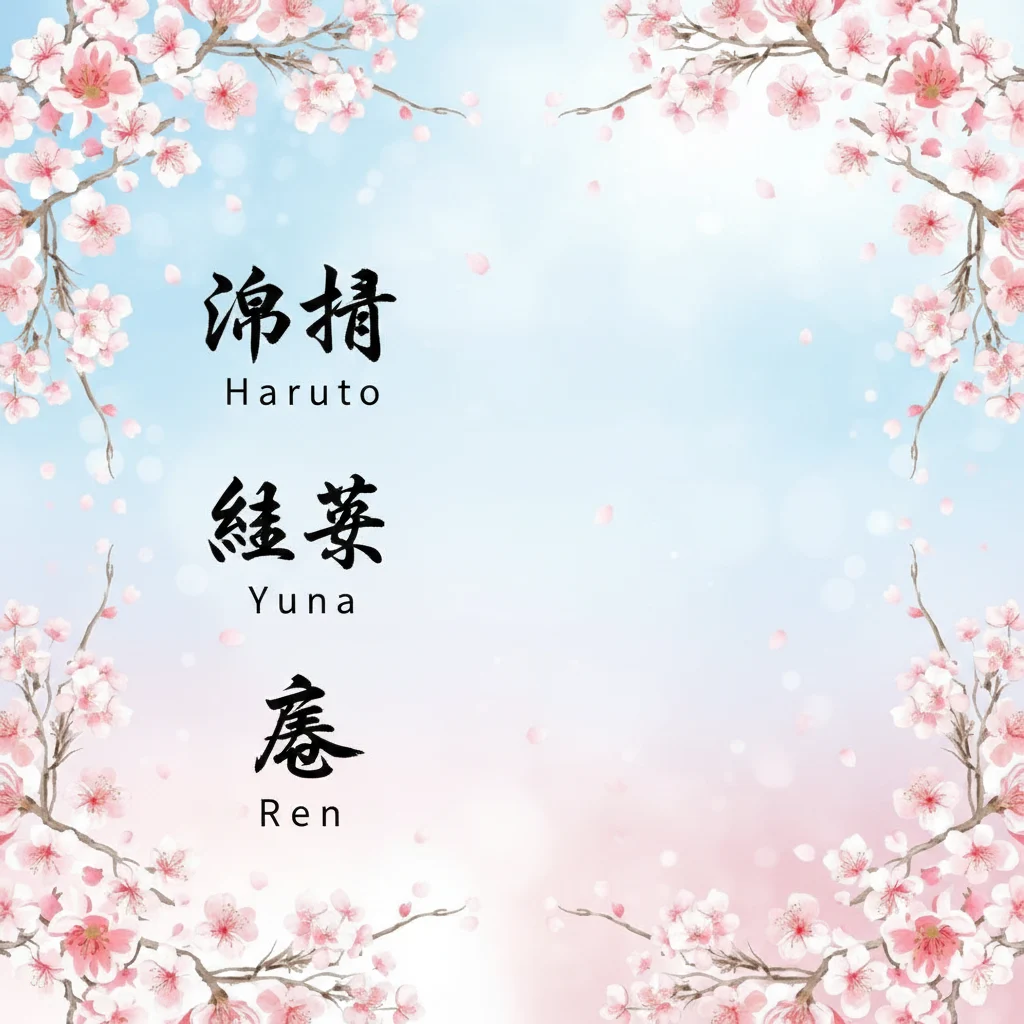
Haruto
Meaning: Sun, fly, soar. Origin: Japanese. Vibe: Bright, successful, and free.
Best for: A boy with a sunny personality and big dreams.
Ren
Meaning: Lotus, love. Origin: Japanese. Vibe: Pure, kind, and strong-minded.
Best for: A gentle but resilient person, creative souls.
Itsuki (It-ski)
Meaning: Tree. Origin: Japanese. Vibe: Dependable, growing, and calm.
Best for: A reliable and steady person, someone connected to nature.
Sora
Meaning: Sky. Origin: Japanese. Vibe: Limitless, peaceful, and open-minded.
Best for: A dreamer with a calm and free spirit.
Kaito (Kye-toe)
Meaning: Ocean, fly, soar. Origin: Japanese. Vibe: Adventurous and brave.
Best for: An explorer, someone who loves the sea and adventure.
Popular Japanese Girl Names
Girl names are often like poetry. They use images from nature, like flowers and the moon. They sound soft, graceful, and full of beauty.
Yuna
Meaning: Kindness, truth, vegetable/plant. Origin: Japanese. Vibe: Gentle, honest, and nurturing.
Best for: A compassionate and sincere girl with a warm heart.
Himari (Hee-ma-ree)
Meaning: Sun, shining. Origin: Japanese. Vibe: Radiant, happy, and full of energy.
Best for: A cheerful girl who lights up the room.
Akari (Ah-ka-ree)
Meaning: Light, brightness. Origin: Japanese. Vibe: Hopeful, smart, and guiding.
Best for: An intelligent and optimistic person who inspires others.
Sakura
Meaning: Cherry blossom. Origin: Japanese. Vibe: Delicate, beautiful, and beloved.
Best for: A graceful and lovely person, a symbol of spring.
Mei / Meia
Meaning: Bud, sprout. Origin: Japanese. Vibe: New, fresh, and full of potential.
Best for: A youthful and lively girl just beginning her journey.
Wonderful Unisex Japanese Names
Some Japanese names work perfectly for anyone! These unisex names are modern, cool, and full of positive meaning.
Aoi (Ah-oh-ee)
Meaning: Hollyhock, blue, green. Origin: Japanese. Vibe: Natural, calm, and artistic.
Best for: A creative person who loves colors and nature.
Ren
Meaning: Lotus, love. Origin: Japanese. Vibe: Pure and strong-minded.
Best for: A gentle but resilient person, perfect for any gender.
Haru
Meaning: Spring, sun, clear weather. Origin: Japanese. Vibe: Cheerful, new beginnings.
Best for: An optimistic person born in spring or bringing happiness.
Asahi (Ah-sa-hee)
Meaning: Morning sun. Origin: Japanese. Vibe: Energetic, hopeful, and a new start.
Best for: A bright and positive person who is a natural leader.
Natsumi (Nat-soo-mee)
Meaning: Summer beauty. Origin: Japanese. Vibe: Lively, warm, and joyful.
Best for: Someone with a sunny and vibrant personality.
31+Shreks kids names Secret Origins: You’ve Been Saying Them Wrong! 🤫
Unique and Less Common Japanese Names
Want a name that stands out? These unique Japanese names are special and carry deep, cool meanings.
Kaze (Ka-zeh)
Meaning: Wind. Origin: Japanese. Vibe: Free, swift, and untamable.
Best for: An independent and spirited adventurer.
Tsubasa (Tsoo-ba-sa)
Meaning: Wings. Origin: Japanese. Vibe: Ambitious, free, and protective.
Best for: A dreamer who aims high and helps others soar.
Hotaru (Ho-ta-roo)
Meaning: Firefly. Origin: Japanese. Vibe: Magical, gentle, and a light in the dark.
Best for: A person with a subtle, guiding inner light.
Sora
Meaning: Sky. Origin: Japanese. Vibe: Limitless and peaceful.
Best for: A philosophical thinker with a calm soul.
Rin
Meaning: Cold, dignified, forest. Origin: Japanese/Chinese. Vibe: Sharp, elegant, and calm.
Best for: A person with strong, quiet dignity and grace.
Funny and Cute Japanese Names
Some names are just adorable or bring a smile to your face! These cute and funny names are often used for pets, nicknames, or characters.
Momo
Meaning: Peach. Origin: Japanese. Vibe: Sweet, cute, and fuzzy.
Best for: A charming and adorable person or pet.
Choco
Meaning: Chocolate (from English). Origin: Modern Japanese. Vibe: Sweet, playful, and loved by all.
Best for: A sweet-natured and delightful friend.
Poko
Meaning: Sound of a light tap. Origin: Japanese. Vibe: Bouncy, small, and energetic.
Best for: A playful little pet or a cheerful character.
Tama
Meaning: Ball, jewel. Origin: Japanese. Vibe: Round, precious, and loyal.
Best for: A beloved pet (like a cat) or a treasured friend.
Bun
Meaning: Bread (from Portuguese). Origin: Modern Japanese. Vibe: Soft, warm, and comforting.
Best for: A cozy and comforting person with a soft heart.
Trendy and Modern Japanese Names
Names change with the times. These modern Japanese names are stylish, often short, and have a cool, international feel.
Rio (Ree-oh)
Meaning: Village cherry tree, jewel, or “river” in Spanish/Portuguese. Origin: Japanese/International. Vibe: Stylish, flowing, and worldly.
Best for: A cosmopolitan and chic person.
Aoi (Ah-oh-ee)
Meaning: Hollyhock, blue. Origin: Japanese. Vibe: Natural, calm, and trendy.
Best for: A stylish person who appreciates art and nature.
Yuma (Yoo-ma)
Meaning: Gentle truth, honesty. Origin: Japanese. Vibe: Kind, honest, and modern.
Best for: A sincere and gentle soul with a contemporary style.
Hina (Hee-na)
Meaning: Sun, vegetables, greens. Origin: Japanese. Vibe: Sunny, healthy, and very popular now.
Best for: A vibrant and beloved modern girl.
Sena (Seh-na)
Meaning: To be swift, to bless. Origin: Japanese. Vibe: Fast, athletic, and blessed.
Best for: An active, sporty, and lucky individual.
33+Dominican Boy Names 🌴 The Hidden Gems No One Tells You About
Fantasy-Inspired Japanese Names
Great for stories, games, or just a magical feel! These fantasy Japanese names sound powerful, mystical, or elegant.
Raiden (Rye-den)
Meaning: Thunder and lightning. Origin: Japanese (from mythology). Vibe: Powerful, electric, and a bit dangerous.
Best for: A mighty warrior or a god-like character with immense power.
Kitsune (Kit-soo-neh)
Meaning: Fox. Origin: Japanese. Vibe: Clever, magical, and mysterious.
Best for: A tricky, wise, or shapeshifting magical character.
Tsukiko (Tsoo-kee-ko)
Meaning: Moon child. Origin: Japanese. Vibe: Mysterious, calm, and connected to the night.
Best for: A serene magical girl or a moon priestess.
Kuro (Koo-ro)
Meaning: Black, ninth son. Origin: Japanese. Vibe: Dark, strong, and sleek.
Best for: A mysterious rogue, a dark knight, or a loyal shadow.
Hikari (Hee-ka-ree)
Meaning: Light. Origin: Japanese. Vibe: Pure, holy, and hope-bringing.
Best for: A healer, a paladin, or a beacon of hope in a dark world.
Mythical and Historical Japanese Names
Connect to legends and heroes. These names from Japanese myths and history carry weight, stories, and epic feelings.
Amaterasu (Ah-ma-te-ra-soo)
Meaning: Shines in heaven. Origin: Japanese Mythology (Sun Goddess). Vibe: Divine, radiant, and supreme.
Best for: A character of ultimate power, light, and leadership.
Susanoo (Soo-sa-no-o)
Meaning: Impetuous male. Origin: Japanese Mythology (Storm God). Vibe: Wild, chaotic, and fiercely protective.
Best for: A rebellious hero or a god of storms and the sea.
Tomoe (To-mo-eh)
Meaning: A comma-shaped jewel. Origin: Japanese. Vibe: Fierce, beautiful, and legendary (like a female samurai).
Best for: A strong, skilled warrior woman.
Musashi (Moo-sa-shee)
Meaning: From a place name. Origin: Japanese (famous swordsman). Vibe: Unbeatable, skilled, and legendary.
Best for: The greatest warrior or master of a craft.
Benkei (Ben-kay)
Meaning: From a place name. Origin: Japanese (legendary warrior monk). Vibe: Gigantic strength, loyal, and monk-like.
Best for: A loyal guardian with immense strength and a good heart.
Meaningful and Strong Japanese Names
Names with powerful meanings. These strong Japanese names are about virtues, success, and inner strength.
Kenji (Ken-jee)
Meaning: Strong, healthy, second son. Origin: Japanese. Vibe: Intelligent, wise, and reliable.
Best for: A smart, capable leader or a trusted advisor.
Isamu (Ee-sa-moo)
Meaning: Courage, bravery. Origin: Japanese. Vibe: Brave, determined, and a fighter.
Best for: A courageous person who never gives up.
Takeo (Ta-keh-oh)
Meaning: Warrior, hero. Origin: Japanese. Vibe: Masculine, strong, and heroic.
Best for: A natural protector and leader.
Makoto (Ma-ko-to)
Meaning: Truth, sincerity. Origin: Japanese. Vibe: Honest, genuine, and deeply trustworthy.
Best for: The most honest and loyal friend you could have.
Naomi (Now-mee)
Meaning: Honest, beautiful, straight. Origin: Japanese. Vibe: Graceful, upright, and lovely.
Best for: A person of great beauty, both inside and out.
Classic and Timeless Japanese Names
Names that never go out of style. These classic Japanese names have been loved for generations for their simple beauty.
Hiroshi (Hee-ro-shee)
Meaning: Generous, tolerant. Origin: Japanese. Vibe: Kind, abundant, and stable.
Best for: A generous and dependable pillar of the family.
Akira (Ah-kee-ra)
Meaning: Bright, clear. Origin: Japanese. Vibe: Intelligent, clear-sighted, and classic.
Best for: A person with a sharp mind and a bright future.
Yoko (Yo-ko)
Meaning: Ocean child, positive child. Origin: Japanese. Vibe: Positive, peaceful, and classic.
Best for: An optimistic and calm person with a timeless vibe.
Ken
Meaning: Healthy, strong, sword. Origin: Japanese/Chinese. Vibe: Simple, strong, and classic.
Best for: A straightforward and strong person.
Keiko (Kay-ko)
Meaning: Blessed child, happy child. Origin: Japanese. Vibe: Joyful, lucky, and a beloved classic.
Best for: A joyful person who brings happiness.
Conclusion
Exploring popular Japanese names is a journey through beauty, nature, and deep meaning. We have seen names for brave boy, graceful girls, and everyone in between. We found unique picks, cute nicknames, and names fit for heroes and gods.
Choosing a name is a special thing. Whether for a new baby, a story character, or just to learn, these names offer a wish for a good life. They can inspire strength, kindness, and joy. We hope this guide helped you discover the perfect popular Japanese names that speak to you. The right name is out there, waiting to be found
Frequently Asked Questions About Japanese Names
Q1: What is the most popular Japanese name right now?
A: For boy, names like Haruto, Ren, and Sōma are currently very trendy. For girls, Yuna, Himari, and Akari are extremely popular. Trends can change yearly, but these have been top contenders recently.
Q2: Do Japanese names have meanings?
A: Yes, almost all Japanese names have specific meanings. They are usually created from kanji characters that represent things from nature (like Haru for “spring”), virtues (like Makoto for “sincerity”), or beautiful concepts (like Hikari for “light”).
Q3: What order are Japanese names said in?
A: In Japan, the family name (surname) comes first, followed by the given name. For example, in “Suzuki Hanako,” Suzuki is the family name, and Hanako is the given name. In English settings, this is sometimes reversed to follow Western order.
Q4: Can a name be both for boy and girls?
A: Yes! There are many unisex names in Japan. Names like Ren, Aoi, Haru, and Sora can be given to anyone. The meaning and feeling of the name are more important than a strict “boy only” or “girls only” rule.
Q5: How do I pronounce Japanese names correctly?
A: Japanese pronunciation is generally consistent. Vowels sound like: *a* as in “father,” *i* as in “machine,” *u* as in “flute,” *e* as in “met,” *o* as in “ore.” Consonants are similar to English. Most syllables have equal stress. When in doubt, try sounding it out slowly.