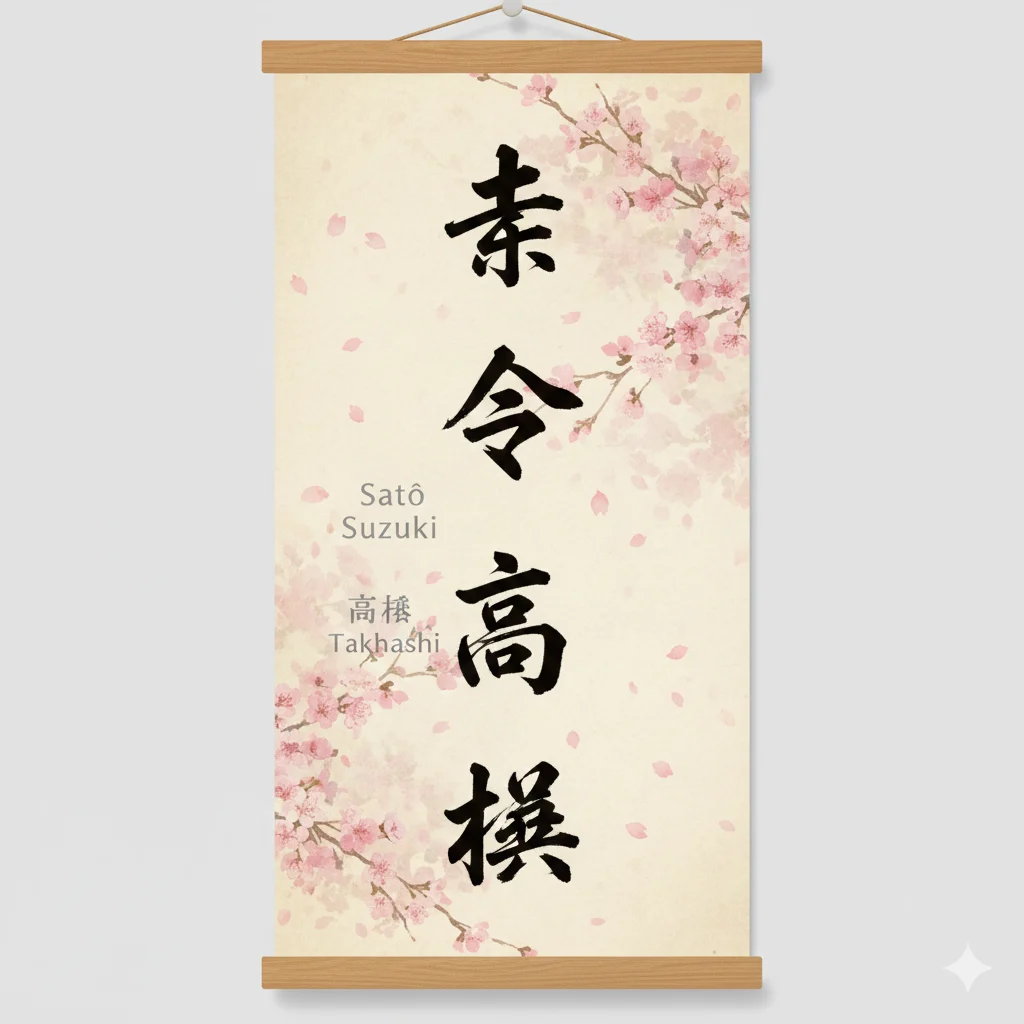
Looking for a list of popular Japanese last names? You’ll find the quick answer right here! The most common Japanese surnames today are Satō (佐藤), Suzuki (鈴木), and Takahashi (高橋). But there’s so much more to discover! These names are like tiny poems, often painting a picture of nature, a place, or a family’s ancient job.
Japanese last names are special because they tell a story. For over a century, most families in Japan have used last names, and they are full of beautiful meanings from nature and history. Learning about popular Japanese last names is fun for writers creating characters, parents thinking of a name, or anyone who loves Japanese culture.
It’s like unlocking a secret code about a family’s past. This guide will explore the most popular Japanese surnames, explain what they mean, and help you find the perfect name for your needs.
Boy Names
These surnames often sound strong and grounded. They are great for male characters or to give a vibe of strength and tradition.
Kobayashi (小林)
- Meaning & Vibe: Means “small forest.” It has a peaceful, nature-loving, and humble feel.
- Best For: A wise, calm character or someone deeply connected to nature and tradition.
Yamamoto (山本)
- Meaning & Vibe: Means “base of the mountain.” It sounds solid, reliable, and enduring.
- Best For: A strong, dependable leader or a character with deep roots and stability.
Inoue (井上)
- Meaning & Vibe: Means “above the well.” It suggests resourcefulness and being a community cornerstone.
- Best For: A clever, inventive character or someone who is essential to their group or family.
Nakajima (中島)
- Meaning & Vibe: Means “middle island.” It gives a vibe of balance, independence, and calm strength.
- Best For: A mediator, a lone wolf, or a character who remains calm in the middle of chaos.
Kojima (小島)
- Meaning & Vibe: Means “small island.” It feels introspective, unique, and self-sufficient.
- Best For: An artist, thinker, or character who stands apart from the crowd with quiet confidence.
Girl Names
These last names often have a graceful, elegant, or beautiful sound, perfect for female characters.
Ishikawa (石川)
- Meaning & Vibe: Means “stone river.” It combines strength (stone) with graceful flow (river).
- Best For: A resilient and graceful character, like a determined artist or a kind but strong leader.
Fujita (藤田)
- Meaning & Vibe: Means “wisteria field.” It sounds beautiful, elegant, and blossoming with potential.
- Best For: A creative, artistic character or someone with a delicate but strong personality.
Mori (森)
- Meaning & Vibe: Simply means “forest.” It feels deep, mysterious, and full of quiet wisdom.
- Best For: A mysterious, wise, or nurturing character who others are drawn to for advice.
Hayashi (林)
- Meaning & Vibe: Means “woods.” It’s lighter than “forest” and feels lively, approachable, and cheerful.
- Best For: An energetic, friendly, and optimistic character who brings people together.
Noguchi (野口)
- Meaning & Vibe: Means “field entrance” or “mouth of the wilderness.” It suggests an adventurous and open spirit.
- Best For: An explorer, a free-spirited traveler, or a character who is a gateway to new adventures.
Unisex Names
These popular Japanese last names work perfectly for anyone. They are flexible and widely used.
Satō (佐藤)
- Meaning & Vibe: The #1 name! Means “helpful wisteria.” It’s incredibly common, friendly, and reliable.
- Best For: Almost any character to make them feel relatable and authentically Japanese.
Suzuki (鈴木)
- Meaning & Vibe: The #2 name! Means “bell tree.” It sounds cheerful, pleasant, and musical.
- Best For: A friendly, upbeat character, or one connected to music, nature, or community.
Tanaka (田中)
- Meaning & Vibe: The #3 name! Means “middle of the rice field.” It feels humble, hardworking, and down-to-earth.
- Best For: A practical, grounded character, perhaps from a rural background or with a strong work ethic.
Watanabe (渡辺)
- Meaning & Vibe: Means “crossing the border.” It has a vibe of travel, crossing paths, and new beginnings.
- Best For: A traveler, a character who bridges two worlds, or someone starting a new chapter.
Itō (伊藤)
- Meaning & Vibe: Means “that wisteria.” It’s a classic, elegant, and slightly poetic surname.
- Best For: A character with a touch of classic elegance, perhaps from a family with history.
33+Dominican Boy Names 🌴 The Hidden Gems No One Tells You About
Unique Names
These surnames are less common and can make a character really stand out.
Tsukiyama (月山)
- Pronunciation: skee-YAH-mah
- Meaning & Vibe: Means “moon mountain.” It sounds mystical, serene, and beautifully lofty.
- Best For: A dreamy artist, a spiritual guide, or a character with a calm and powerful presence.
Kaminari (雷)
- Pronunciation: kah-mee-NAH-ree
- Meaning & Vibe: Means “thunder.” It is powerful, loud, and impossible to ignore.
- Best For: A dynamic, energetic, or fearsome character who makes a big impact.
Shiranui (不知火)
- Pronunciation: shee-rah-NOO-ee
- Meaning & Vibe: Means “unknown fire,” like mysterious sea lights. It feels mystical and enigmatic.
- Best For: A mysterious mage, a character with hidden powers, or one shrouded in legend.
Fuyuki (冬木)
- Pronunciation: foo-YOO-kee
- Meaning & Vibe: Means “winter tree.” It suggests quiet strength, resilience in hardship, and calm beauty.
- Best For: A survivor, a patient strategist, or a character with a cool and collected exterior.
Uzumaki (渦巻)
- Pronunciation: oo-zoo-MAH-kee
- Meaning & Vibe: Means “whirlpool” or “spiral.” It feels energetic, captivating, and powerful.
- Best For: A charismatic leader, a powerful force of nature, or a character with a compelling destiny.
Funny Names
These real surnames have meanings that might sound humorous or unexpected in English.
Usui (薄井)
- Meaning & Vibe: Means “thin well.” It can sound funny, suggesting a well that doesn’t have much water.
- Best For: A lanky character, a comedian, or someone who is resourceful despite modest means.
Nukui (温井)
- Pronunciation: noo-KOO-ee
- Meaning & Vibe: Means “warm well.” It sounds cozy and friendly, like a happy place.
- Best For: A kind, comforting, and welcoming character, like a baker or a healer.
Komeya (米屋)
- Meaning & Vibe: Literally means “rice shop.” It’s very direct and practical.
- Best For: A shopkeeper, a practical joker, or a character who is straightforward and no-nonsense.
Oki (沖)
- Meaning & Vibe: Means “offing” or “open sea.” It’s short and can sound like “okey-dokey” in English.
- Best For: A laid-back, go-with-the-flow surfer type or a sailor.
Warito (割戸)
- Pronunciation: wah-REE-toh
- Meaning & Vibe: Means “split door.” It has a silly, literal vibe that could fit a quirky character.
- Best For: An eccentric inventor, a quirky sidekick, or a character who is a little “split” in personality.
Trendy / Modern Names
These names feel fresh, stylish, and are often shorter or have a cool sound.
Kai (海)
- Meaning & Vibe: Means “sea.” It’s short, global, and evokes freedom and depth.
- Best For: A modern, adventurous character or someone with a deep, calm personality.
Ren (蓮)
- Meaning & Vibe: Means “lotus.” It’s sleek, spiritual, and symbolizes purity and rebirth.
- Best For: A stylish, introspective character, or one who has overcome challenges to bloom.
Sora (空)
- Meaning & Vibe: Means “sky.” It feels limitless, open-minded, and dreamy.
- Best For: A free-thinking artist, a pilot, or an optimistic character with big dreams.
Haru (春)
- Meaning & Vibe: Means “spring.” It’s bright, hopeful, and full of new beginnings.
- Best For: An upbeat, positive character who brings renewal and energy to others.
Yuki (雪)
- Meaning & Vibe: Means “snow.” It’s clean, pure, quiet, and beautifully cool.
- Best For: A graceful, calm character, perhaps with a quiet strength or a hidden warmth.
Fantasy Names
Perfect for games, stories, or characters with a magical or otherworldly feel.
Ryūgamine (竜が峰)
- Pronunciation: ryoo-gah-MEE-neh
- Meaning & Vibe: Means “dragon peak.” It sounds epic, majestic, and powerful.
- Best For: A dragon rider, a king of a mountain kingdom, or a legendary warrior.
Yōkai (妖怪)
- Pronunciation: YOH-kye
- Meaning & Vibe: Means “phantom” or “apparition.” It is directly tied to Japanese spirits and monsters.
- Best For: A spirit character, a mysterious shapeshifter, or a demon hunter.
Kurai (暗い)
- Meaning & Vibe: Means “dark.” It’s simple, moody, and perfect for a shadowy vibe.
- Best For: A rogue, a character who works in shadows, or one with a dark past.
Hikari (光)
- Meaning & Vibe: Means “light.” It’s pure, hopeful, and the opposite of darkness.
- Best For: A healer, a paladin, a magical girl, or the “chosen one” hero.
Tsukumo (九十九)
- Pronunciation: skoo-KOO-moh
- Meaning & Vibe: Means “ninety-nine,” a number suggesting great quantity and mystery.
- Best For: An ancient wizard, a keeper of many secrets, or a character with a long, long life.
The Secret Trend Redefining 29+ Popular Japanese Names In 2026 🔮
Mythical / Historical Names
These names carry weight from Japan’s rich history and folklore.
Minamoto (源)
- Meaning & Vibe: A legendary clan name meaning “source” or “origin.” It feels noble, ancient, and powerful.
- Best For: A samurai lord, a character from an ancient royal lineage, or a founding hero.
Taira (平)
- Meaning & Vibe: Another great historical clan, rivals of the Minamoto. Means “peace” but implies great conflict.
- Best For: A noble warrior, a tragic hero from a fallen clan, or a character in a historical drama.
Himiko (日見子)
- Pronunciation: hee-MEE-koh
- Meaning & Vibe: Name of a legendary shaman queen. It feels mystical, regal, and ancient.
- Best For: A powerful sorceress queen, a spiritual leader, or a divine oracle.
Susanoo (須佐之男)
- Pronunciation: soo-SAH-noh-oh
- Meaning & Vibe: The storm god in myth. It is wild, tempestuous, and fiercely powerful.
- Best For: A god character, a warrior with a stormy temper, or a force of chaotic nature.
Izanagi (伊邪那岐)
- Pronunciation: ee-zah-NAH-gee
- Meaning & Vibe: A creator god in Japanese mythology. It sounds primordial and foundational.
- Best For: A creator deity, an ancient progenitor, or a character on a mythic quest to the underworld.
Meaningful / Strong Names
These surnames carry powerful, positive meanings of strength, beauty, and virtue.
Takeuchi (竹内)
- Meaning & Vibe: Means “inside the bamboo.” Bamboo bends but doesn’t break, symbolizing resilience.
- Best For: A resilient character who can adapt to any challenge without losing their core strength.
Masuda (増田)
- Meaning & Vibe: Means “increasing rice fields.” It suggests prosperity, growth, and abundance.
- Best For: A successful businessperson, a generous leader, or a character who builds and nurtures.
Yoshida (吉田)
- Meaning & Vibe: Means “lucky field” or “good field.” It sounds fortunate, auspicious, and blessed.
- Best For: A lucky character, an optimistic hero, or someone who always lands on their feet.
Kiyomizu (清水)
- Pronunciation: kee-yoh-MEE-zoo
- Meaning & Vibe: Means “pure water.” It evokes clarity, cleansing, and a peaceful spirit.
- Best For: A healer, a truth-seeker, or a character with a pure heart and clear intentions.
Ishioka (石岡)
- Pronunciation: ee-shee-OH-kah
- Meaning & Vibe: Means “stone hill.” It combines unbreakable strength with a solid, elevated position.
- Best For: An unshakeable defender, a wise elder on a hill, or a character of great integrity.
Nature-Inspired Names
A huge category of popular Japanese last names, directly reflecting Japan’s beautiful landscape.
Yamada (山田)
- Meaning & Vibe: Means “mountain field.” It is one of the most common and picturesque nature names.
- Best For: A reliable, down-to-earth character from a farming or rural background.
Kawasaki (川崎)
- Meaning & Vibe: Means “river cape” or “promontory.” It suggests a place where land meets water.
- Best For: An adventurous character, an explorer, or someone who lives by the water.
Matsushita (松下)
- Meaning & Vibe: Means “under the pine tree.” It evokes peace, longevity, and protection.
- Best For: A wise mentor, a protective guardian, or a character who values tradition.
Sasaki (佐々木)
- Meaning & Vibe: Often linked to “help tree” or grove. It’s common and has a helpful, community feel.
- Best For: A supportive friend, a team player, or a character who is a pillar of their village.
Hoshino (星野)
- Pronunciation: hoh-shee-noh
- Meaning & Vibe: Means “field of stars.” It is beautifully poetic, dreamy, and magical.
- Best For: A dreamer, an astronomer, or a character with a destiny written in the stars.
FAQs About Popular Japanese Last Names
What is the #1 most popular Japanese last name?
The most common last name in Japan is Satō (佐藤), meaning “helpful wisteria.”
Why do so many Japanese last names come from nature?
For centuries, most Japanese people lived in rural areas. Their names were inspired by their surroundings—like Yamamoto (mountain base), Tanaka (rice field), or Ishikawa (stone river).
Can a Japanese last name be used as a first name?
Sometimes! Short, elegant names like Ren, Kai, Haru, or Yuki are popular modern first names in Japan and are also surnames.
What does the “-ko” ending mean in names?
“-ko” (子) means “child.” It was very common in female first names in the 20th century (e.g., Yumiko, Keiko) but is not a typical ending for family names.
How many Japanese last names are there?
There are estimated to be over 100,000 different Japanese surnames! However, the top 10 popular Japanese last names are shared by millions of people.
Conclusion
Exploring popular Japanese last names is a wonderful journey into the heart of Japan’s culture and history. Each name, from the super-common Satō to the unique Tsukiyama, tells a short story about nature, place, or hope. Whether you’re a writer looking for the perfect character name, a curious learner, or someone seeking a meaningful name, this list shows the beauty and depth behind these everyday words. We hope this guide helps you find the perfect name and appreciate the rich stories behind these popular Japanese surnames.