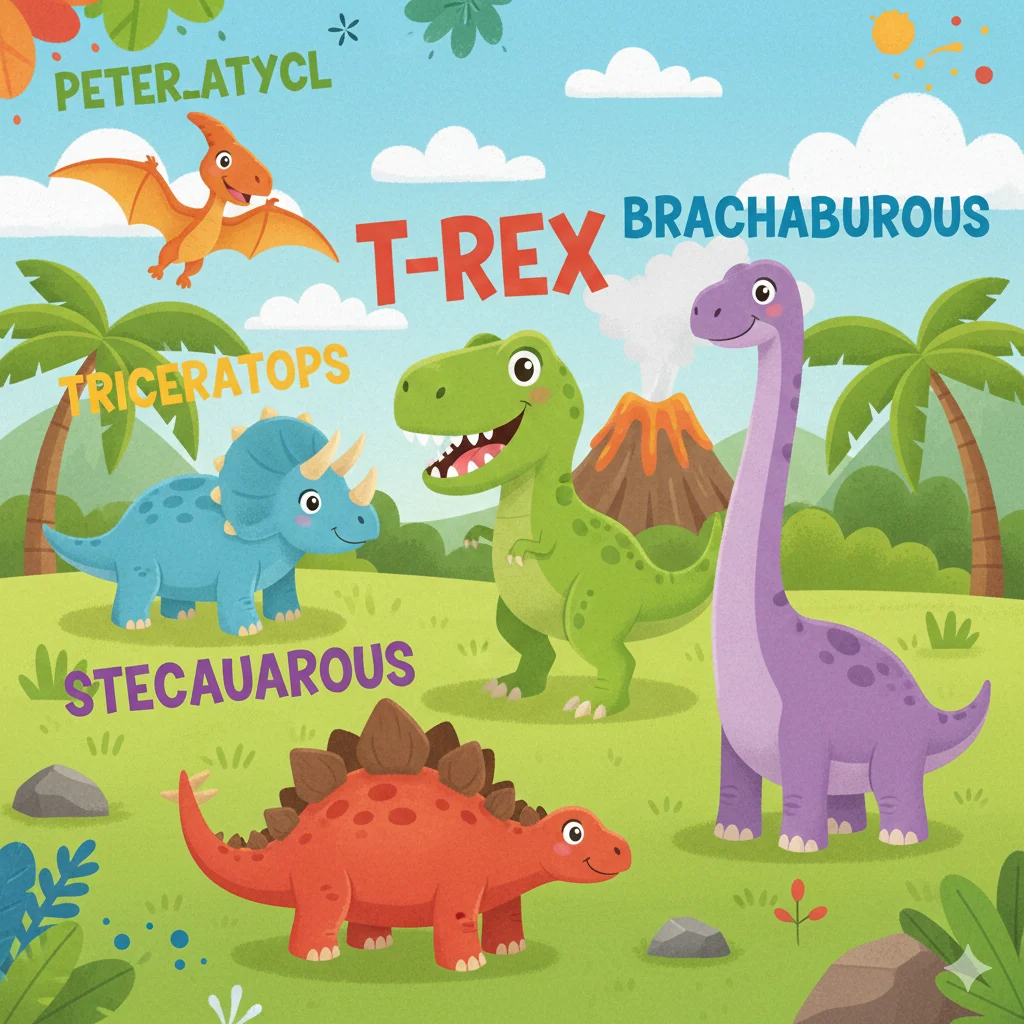
Have you ever wondered what the name “Tyrannosaurus Rex” really means? Or why some dinosaurs have names that sound like another language? Dinosaur names and pictures help us unlock the secrets of these amazing animals. Each name is a clue, telling us about the dinosaur’s size, what it ate, how it looked, or where its bones were found. Looking at dinosaur pictures with names lets us see the incredible world of the past.
This guide is your one-stop shop for everything about dinosaur names. We will explore what their cool names mean, from the “terrible lizard king” to the “three-horned face.” You will get to see pictures of all your favorite dinosaurs and learn who they were. Get ready for a fun trip back in time!
Let’s dig in and discover the most famous, the strangest, and the most awesome dinosaur names and pictures!
Why Do Dinosaurs Have Such Strange Names?
Most dinosaur names come from two ancient languages: Greek and Latin. Scientists use these languages so that researchers all over the world can understand each other. A name usually has two parts. The first part tells us something special about the dinosaur. The second part often ends in “-saurus,” which means “lizard” or “reptile” in Greek.
For example, “Triceratops” comes from Greek words: “tri” (three), “keras” (horn), and “ops” (face). So, Triceratops means “three-horned face.” The names are like little puzzles that tell a story about the dinosaur’s most amazing features!
The Fiercest Meat-Eaters: Dinosaur Names and Pictures
These dinosaurs were the predators of their time. Their names often sound powerful and scary, just like they were!
Tyrannosaurus Rex
- What it Means: “Tyrant Lizard King” from Greek.
- Who it Was: The most famous dinosaur of all! T. Rex was a huge meat-eater with massive jaws and tiny arms. It was the top predator.
- Best For: Anyone who loves the king of the dinosaurs.
Velociraptor (veh-LOSS-ih-RAP-tor)
- What it Means: “Swift Thief” from Latin.
- Who it Was: A fast, smart, and feathered hunter with a deadly claw on each foot. It was much smaller than in the movies!
- Best For: Fans of clever and speedy hunters.
Spinosaurus (SPY-noh-SOR-us)
- What it Means: “Spine Lizard” from Latin, for its huge back sail.
- Who it Was: Possibly the largest carnivorous dinosaur ever. It lived in and around water and might have eaten fish.
- Best For: Lovers of record-breaking, unique-looking predators.
Allosaurus (AL-oh-SOR-us)
- What it Means: “Different Lizard” from Greek.
- Who it Was: A big, powerful meat-eater that lived before T. Rex. It had sharp teeth and claws.
- Best For: Those interested in the fierce hunters of the Jurassic period.
Giganotosaurus (JIG-ah-NOTE-oh-SOR-us)
- What it Means: “Giant Southern Lizard” from Greek.
- Who it Was: A gigantic predator from South America that was even longer than T. Rex.
- Best For: Fans of super-sized, terrifying carnivores.
The Gentle Giants: Plant-Eating Dinosaur Names and Pictures
Not all dinosaurs were fierce. Many were huge, peaceful animals that spent their days eating plants. Their names often describe their incredible size or special bodies.
Brachiosaurus (BRACK-ee-oh-SOR-us)
- What it Means: “Arm Lizard” from Greek, because its front legs were longer than its back legs.
- Who it Was: A super tall sauropod with a long neck that let it eat leaves from the tops of trees.
- Best For: Anyone amazed by enormous, long-necked dinosaurs.
Stegosaurus (STEG-oh-SOR-us)
- What it Means: “Roof Lizard” from Greek, because scientists first thought its plates lay flat like roof tiles.
- Who it Was: A heavy dinosaur with big, bony plates on its back and a spiky tail for defense.
- Best For: Lovers of armored dinosaurs with cool, mysterious plates.
Triceratops (try-SERRA-tops)
- What it Means: “Three-Horned Face” from Greek.
- Who it Was: A strong, rhino-like dinosaur with three horns and a bony frill to protect its neck.
- Best For: Fans of powerful, well-defended herbivores.
Ankylosaurus (an-KYE-low-SOR-us)
- What it Means: “Fused Lizard” from Greek, referring to its bony armor.
- Who it Was: A walking tank! It had thick body armor and a massive bony club on its tail.
- Best For: Those who like dinosaurs built like fortresses.
Diplodocus (dih-PLOD-oh-kus)
- What it Means: “Double Beam” from Greek, because of special bones in its tail.
- Who it Was: An extremely long, whip-tailed sauropod. It was one of the longest dinosaurs ever.
- Best For: People fascinated by record-breaking length.
Fast and Feathered: Dinosaur Names and Pictures
Scientists now know many dinosaurs had feathers! These dinosaurs were often small, fast, and closely related to birds.
Archaeopteryx (ARK-ee-OP-ter-ix)
- What it Means: “Ancient Wing” from Greek.
- Who it Was: One of the earliest known birds. It had feathers like a bird but teeth and a tail like a dinosaur.
- Best For: Anyone interested in the link between dinosaurs and birds.
Oviraptor (OH-vi-RAP-tor)
- What it Means: “Egg Thief” from Latin, because its first fossil was found near eggs.
- Who it Was: A clever, feathered dinosaur with a beak. It was likely an omnivore and may have been caring for its own eggs, not stealing them!
- Best For: Fans of misunderstood, bird-like dinosaurs.
Microraptor (MY-crow-RAP-tor)
- What it Means: “Small Thief” from Greek.
- Who it Was: A tiny, four-winged, feathered dinosaur that could probably glide from tree to tree.
- Best For: Lovers of tiny, fascinating, gliding creatures.
Yutyrannus (yoo-tih-RAN-us)
- What it Means: “Feathered Tyrant” from Chinese and Greek.
- Who it Was: A large, early cousin of T. Rex that was covered in shaggy feathers to keep warm.
- Best For: Those surprised to learn that even big tyrannosaurs had feathers!
Velociraptor
- We mentioned it with meat-eaters, but it belongs here too! We now know it was covered in feathers, making it a fast, smart, and bird-like hunter.
🤔 Girl Names With V: The Mystery Behind These Names…
The Strangest Looking: Unique Dinosaur Names and Pictures
Some dinosaurs looked like they were from a dream! Their names help us describe their weird and wonderful features.
Parasaurolophus (PARA-saw-ROL-oh-fus)
- What it Means: “Near Crested Lizard” from Greek, as it was similar to Saurolophus.
- Who it Was: A duck-billed dinosaur with a long, curved, tube-shaped crest on its head. It might have used it to make loud sounds.
- Best For: Fans of dinosaurs with amazing headgear.
Therizinosaurus (THERA-ih-ZEEN-oh-SOR-us)
- What it Means: “Scythe Lizard” from Greek, for its gigantic claws.
- Who it Was: A tall, slow-moving dinosaur with the longest claws of any animal ever (over 3 feet long!). It was a peaceful plant-eater.
- Best For: Lovers of the bizarre and unexpectedly gentle giants.
Pachycephalosaurus (PACK-ee-SEFF-ah-lo-SOR-us)
- What it Means: “Thick-Headed Lizard” from Greek.
- Who it Was: A dinosaur with an incredibly thick, dome-shaped skull. It might have used its head for fighting.
- Best For: Those who like dinosaurs with built-in helmets.
Amargasaurus (ah-MAR-gah-SOR-us)
- What it Means: Named after La Amarga, Argentina, where it was found.
- Who it Was: A sauropod with two rows of long spines sticking up from its neck and back. No one knows exactly what they were for!
- Best For: Anyone intrigued by mysterious spines and sails.
Cryolophosaurus (CRY-oh-LOAF-oh-SOR-us)
- What it Means: “Cold Crest Lizard” from Greek.
- Who it Was: A meat-eater from Antarctica with a unique, forward-curving crest on its head.
- Best For: Fans of polar dinosaurs and funky crests.
Pretty Girl Names Unique: Myth vs. Reality Revealed 🔍
Dinosaur Names from Around the World
Dinosaur fossils are found on every continent, and their names often honor the places they were discovered or the people who found them.
Argentinosaurus (ARE-jen-TEEN-oh-SOR-us)
- What it Means: “Argentina Lizard” from Spanish and Greek.
- Who it Was: One of the largest and heaviest land animals to ever walk the Earth. A true giant from South America.
- Best For: Lovers of super-heavyweight champions.
Edmontosaurus (ed-MON-toe-SOR-us)
- What it Means: Named after Edmonton, Canada, where its fossils are common.
- Who it Was: A very common, large duck-billed dinosaur with a flat head.
- Best For: Those interested in widespread, successful herbivores.
Maiasaura (my-ah-SOR-ah)
- What it Means: “Good Mother Lizard” from Greek.
- Who it Was: A duck-bill dinosaur known from fossil nests and eggs. It proved that some dinosaurs cared for their young.
- Best For: Anyone who likes evidence of dinosaur family life.
Australovenator (OSS-trah-low-VEN-ah-tor)
- What it Means: “Southern Hunter” from Latin.
- Who it Was: A fast and lean predator known as “Australia’s answer to Velociraptor.”
- Best For: Fans of predatory dinosaurs from the land down under.
Zhuchengtyrannus (zhoo-CHENG-tie-RAN-us)
- What it Means: “Zhucheng Tyrant” from Chinese and Greek.
- Who it Was: A close Asian cousin of T. Rex, discovered in Zhucheng, China.
- Best For: Those curious about tyrannosaurs from Asia.
How to Pronounce Tricky Dinosaur Names
Don’t worry if the names seem hard! Here’s a simple way to sound them out:
- Break the name into parts (Tri-cera-tops).
- Say each part slowly.
- The capital letters in our guides show which part to say a little louder.
- Practice makes perfect! Saying them out loud is fun.
Where to Find More Dinosaur Pictures and Information
The best places to see dinosaur names and pictures are:
- Natural History Museums: See real fossils and amazing models.
- Books from Your Library: Look for books with lots of colorful illustrations.
- Trusted Science Websites: Sites for kids from museums or universities have great facts and pictures.
Conclusion
Exploring dinosaur names and pictures is like being a detective. Every name tells a story about the dinosaur’s life, from the mighty Tyrannosaurus Rex to the gentle, long-necked Brachiosaurus. Pictures help us imagine these incredible creatures walking, eating, and living millions of years ago.
We hope this guide to dinosaur names and pictures has helped you learn something new and exciting. Whether you’re drawing your favorite dinosaur, reading a book, or just telling a friend a cool fact, remember that each name is a key to our planet’s amazing past. Keep exploring and discovering!
FAQ
Q: What does “-saurus” mean in dinosaur names?
A: It comes from the Greek word for “lizard” or “reptile.” So, most dinosaur names end with “lizard,” like “Tyrant Lizard King” for T. Rex.
Q: What was the biggest dinosaur ever?
A: Based on fossils, the biggest dinosaurs were sauropods like Argentinosaurus and Patagotitan. They were longer than a basketball court and heavier than a jet plane!
Q: Did all dinosaurs live at the same time?
A: No! Dinosaurs lived over a very long time (about 180 million years). Stegosaurus was extinct for millions of years before T. Rex ever appeared.
Q: How do scientists choose dinosaur names?
A: They choose names based on the dinosaur’s features (like Triceratops), where it was found (like Argentinosaurus), or sometimes to honor a person.
Q: Where can I see real dinosaur pictures (fossils)?
A: Your local natural history museum is the best place! Many also have excellent websites with photo galleries of their dinosaur fossils.