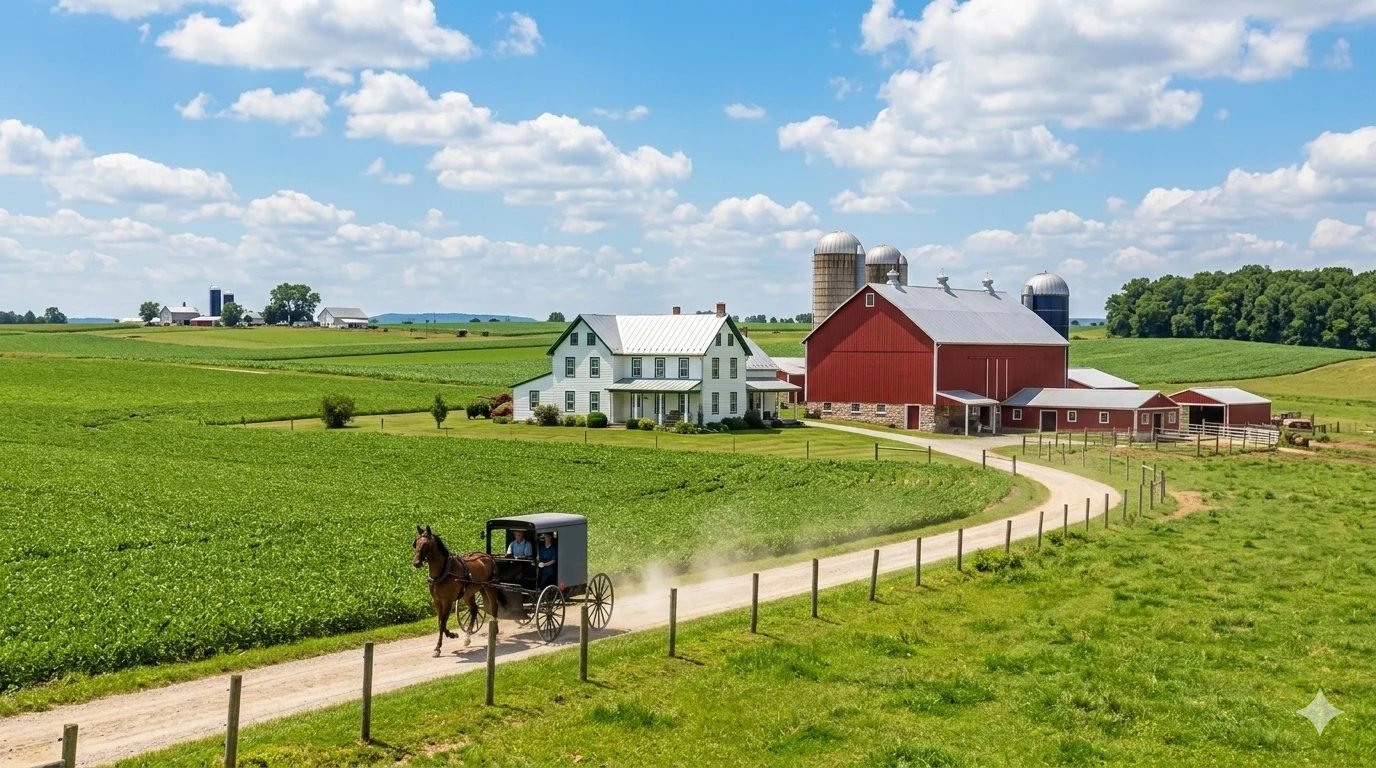
If you have ever been curious about the Amish community, you might have noticed that many people share similar last names. Amish last names are more than just family labels; they are a direct link to a rich history of faith, migration, and community. In short, most Amish surnames originate from Swiss-German and German ancestors who settled in Pennsylvania in the 1700s.
For readers interested in genealogy, culture, or unique naming traditions, exploring common Amish last names offers a fascinating glimpse into a world that values tradition and simplicity. These names have remained remarkably consistent over centuries, telling stories of farming, faith, and family.
Whether you are writing a story, researching your family tree, or just satisfying your curiosity, this guide to popular Amish last names will help you understand their origins and meanings. Let’s dive into the world of Amish surnames and discover the people behind them.
The Most Common Amish Last Names
This section covers the heavy hitters. If you meet an Amish person, there is a high chance their last name is one of these. These are the most common Amish last names you will encounter across all communities.
Stoltzfus
Meaning: This name is a classic Swiss-German name. It breaks down into “stoltz” (meaning proud or stately) and “fus” (meaning foot). It might have originally described someone with a proud posture or a specific way of walking.
Best For: This name is incredibly common in Lancaster County, Pennsylvania. It is perfect for a character or person who is seen as a leader in the community, someone with a strong presence.
Yoder
Meaning: Yoder (pronounced YO-der) is a variation of the name “Theodore.” It means “people’s ruler” or “gift of God.” It is one of the most widespread names in the Amish and Mennonite communities.
Best For: This surname fits a friendly, family-oriented person. Since it is so common, it gives the feeling of being part of a big, extended family.
Lapp
Meaning: Lapp (pronounced like “lap”) is a Swiss-German name. It originally referred to someone who came from the Lapp region, or it could mean “simple” or “slow-moving,” which was not an insult but a descriptor of a calm personality.
Best For: This name is great for a quiet, gentle soul who prefers a simple life and moves at their own peaceful pace.
Esh
Meaning: Esh (pronounced like the first part of “ESH-sion,” but short: ESH) is a shortened form of a name like “Esch” or “Asch.” In German, it can relate to “ash tree,” suggesting the family lived near a notable ash tree or in an area with ash trees.
Best For: This name suits someone who is strong and steady, just like a tree, and provides shade and support for those around them.
King
Meaning: Often asked, “Is King an Amish name?” Yes, it is. It doesn’t mean the family is royalty. It is derived from the German word “König,” which could mean a person who worked for a king, acted like a king, or won a title in a contest.
Best For: A person with this name might have natural leadership qualities or a dignified, respectable way about them.
Amish Last Names in Ohio
Ohio is home to the largest Amish population in the world. While they share many names with Pennsylvania, some are particularly dense in areas like Holmes County. These are common Amish last names in Ohio.
Miller
Meaning: This is one of the most common names in the English-speaking world, and it is huge in Ohio. It comes from the German “Müller,” meaning a person who ground grain into flour at a mill.
Best For: This name is perfect for a hardworking, essential member of the community—someone everyone relies on for their daily bread (literally and figuratively).
Hershberger
Meaning: Hershberger (pronounced HERSH-ber-ger) is a German topographic name. It means “deer mountain” or “hill of the deer.” It likely described a family living on or near a hill where deer roamed.
Best For: This name fits someone who is gentle and swift, yet also has a strong connection to nature and the rural landscape.
Troyer
Meaning: Troyer (pronounced TROY-er) is a name from the Swiss Alps. It originally described someone from the city of Troyes in France, or a person from the region of “Treier.” It’s a very distinctive Amish surname.
Best For: A person with this name might have an adventurous spirit, connecting them back to the travels of their ancestors from Europe to America.
Schlabach
Meaning: Schlabach (pronounced SHLAH-bok) is a German name meaning “reed brook” or “muddy stream.” It described a family that lived near a specific kind of small creek or wetland.
Best For: This surname is great for someone who is adaptable and can thrive wherever they are planted, just like reeds by the water.
Raber
Meaning: Raber (pronounced RAY-ber) is a German occupational name. It might have referred to a turnip farmer (Rübe meaning turnip) or someone who worked as a “Raber,” a type of official in medieval times.
Best For: This name suits a dedicated farmer or someone who is very organized and keeps things in order.
10 Secret Trio Group Chat Names Your Friends Will Love 🤫
Pennsylvania Amish Last Names
Lancaster County is the historic heart of Amish America. The names here are the oldest and most established. These are key Pennsylvania Amish last names.
Beiler
Meaning: Beiler (pronounced BY-ler) is a classic Swiss-German name. It is an occupational name for a builder or a cooper (a barrel maker). It comes from the word “bielen,” meaning to beat or construct.
Best For: This name is ideal for a craftsman, a carpenter, or anyone who loves to build things with their hands.
Zook
Meaning: Zook (pronounced ZOOK, rhymes with “book”) is a shortened form of a name like “Soukup.” It is a very old Swiss name and is almost exclusively found in Amish and Mennonite communities.
Best For: This unique name is great for someone who stands out in the community for their unique skills or quiet wisdom.
Smucker
Meaning: Smucker (pronounced SMUCK-er) is a German occupational name for a fabric dyer or someone who stained cloth.
Best For: Today, it is famously associated with the jam company, but for an Amish person, it fits a creative individual who adds color and sweetness to the world.
Fisher
Meaning: This is the English version of the German “Fischer.” It is an occupational name for a fisherman. In the Amish context, it might have been for someone whose farm included a pond or who lived by a river.
Best For: A patient, persistent person who understands that good things come to those who wait.
Glick
Meaning: Glick (pronounced GLICK, rhymes with “tick”) is a German name that literally means “luck” or “blessing.” It was likely originally a nickname for a fortunate person.
Best For: This name is perfect for a cheerful optimist who always seems to land on their feet and brings good fortune to others.
Amish Last Names in Indiana
Indiana has a large Amish settlement, especially around Elkhart and LaGrange counties. Many families moved there from Pennsylvania and Ohio. Here are common Amish last names in Indiana.
Bontrager
Meaning: Bontrager (pronounced BAHN-tray-ger) is a name from the Jura Mountains in Switzerland. It is a regional name, meaning someone from that specific area.
Best For: This name suits a person with deep roots and a strong connection to their family history.
Hochstetler
Meaning: Hochstetler (pronounced HOKE-stet-ler) is one of the most famous Amish names. It comes from the German “hoch” (high) and “Stettler” (place), meaning someone living at a high farmstead.
Best For: This name is great for a family that is seen as a pillar of the community, with high standards and a strong, visible faith.
Gingerich
Meaning: Gingerich (pronounced GING-er-ick) is a Swiss-German name. It is a patronymic name, meaning it was derived from a first name like “Ginger” or “Gangolf.”
Best For: This name fits someone who is warm and lively, maybe with a bit of a spirited personality.
Mast
Meaning: Mast is a German name. It can mean “food” or “fodder,” but as a surname, it likely comes from “Mast,” meaning a place with beech trees where pigs were fattened on the nuts (mast).
Best For: This name is perfect for a generous person who loves to host big meals and make sure everyone is well-fed.
Yutzy
Meaning: Yutzy (pronounced YUT-zee) is a variation of Yoder. It shows how spelling changed as families moved and records were written down by English-speaking clerks.
Best For: This name is for someone who is traditional at heart but has a slightly unique twist to their personality.
Unique and Uncommon Amish Last Names
While many names are common, some are rarer. These unique Amish last names still carry the weight of tradition but are less frequently heard.
Kauffman
Meaning: This name means “merchant” or “trader.” In a community known for farming, this name points to an ancestor who may have run a store or traded goods.
Best For: A sharp-minded person with a good sense for business and fair dealing.
Wengerd
Meaning: Wengerd (pronounced WENG-erd) is a Swiss topographic name for someone who lived in a “weng,” which is a narrow meadow or field in a valley.
Best For: This name suits someone who is peaceful, likes quiet places, and enjoys the beauty of nature.
Hostetler
Meaning: Very similar to Hochstetler, Hostetler (pronounced HOSS-tet-ler) is another spelling variation. It also means “innkeeper” or someone who runs a hostel.
Best For: This name is great for a welcoming person who loves having guests and making them feel at home.
Borntrager
Meaning: Borntrager (pronounced BORN-tray-ger) is another variation of Bontrager. The slight spelling change often happened when families settled in new areas.
Best For: A person with this name might be an explorer at heart, always ready to move forward while honoring the past.
Lehman
Meaning: Lehman (pronounced LAY-man) is a German name meaning “vassal” or “one who owns land.” It originally described someone who held land in exchange for service to a lord.
Best For: This name fits a loyal, dependable person who takes their responsibilities seriously.
The Tiny Detail In 43+Gun Names For Dogs 🧐
Strong and Meaningful Amish Names
These last names have a particularly powerful sound or meaning. These are strong Amish last names that command respect.
Brenneman
Meaning: Brenneman (pronounced BREN-eh-man) is a German name meaning “burner man.” This could refer to a charcoal burner or someone who cleared land by burning.
Best For: This name fits a passionate, energetic person who clears the way for others and brings light to dark places.
Zimmerman
Meaning: This is the German word for “carpenter.” It is one of the most famous and respected trades in the Bible and in Amish culture.
Best For: This name is perfect for a builder, a creator, or someone with the skill to turn simple wood into something beautiful and useful.
Petersheim
Meaning: Petersheim (pronounced PEE-ters-heym) means “Peter’s home” or “the home of the Peters family.” It’s a locational surname, indicating the family farm.
Best For: This name is for someone deeply rooted in their family and their home place, valuing stability and tradition above all.
Wenger
Meaning: Wenger (pronounced WENG-er) is a Swiss-German name meaning “vineyard worker” or someone who lives near a meadow. It comes from the word “weng,” meaning a grassy slope.
Best For: This name suits a hard worker who cultivates goodness and beauty wherever they go.
Riehl
Meaning: Riehl (pronounced REEL) is a German name meaning “one who comes from Riehl,” a place near Cologne. It can also mean a person who lives in a low-lying, marshy area.
Best For: A grounded, humble person who stays close to the earth and their roots.
Amish Last Names That Start with B
Looking for a specific letter? Here are some common Amish last names starting with B.
Beachey
Meaning: Beachey (pronounced BEE-chee) is a Swiss-German name. It is a variation of “Betschi” and is very common in some Amish settlements.
Best For: A friendly, approachable person with a name that sounds as warm as a sunny beach.
Burkholder
Meaning: Burkholder (pronounced BURK-hold-er) means someone who lives in a fortified place or a “castle” (Burg) and “holds” the land.
Best For: A protective, dependable person who acts as a stronghold for their family and friends.
Blank
Meaning: Blank (pronounced BLANK) is a German name. It can mean “shining” or “white,” possibly describing someone with fair hair or a bright, pure personality.
Best For: A person with a clear, honest, and straightforward character.
Beachy
Meaning: Beachy (pronounced BEE-chee) is another common spelling variation of Beachey. It is very common in communities like Holmes County, Ohio.
Best For: A kind-hearted neighbor who is always willing to lend a hand.
Byler
Meaning: Byler (pronounced BY-ler) is a variation of Beiler, meaning a builder or barrel maker.
Best For: This name suits a skilled craftsman who takes pride in making things that last.
Amish Last Names That Start with S
Here are some notable Amish last names that start with S.
Stoltzfus
Meaning: As mentioned before, this name means “proud foot.” It is arguably the most famous Amish surname.
Best For: A community leader or someone with a dignified and respected presence.
Smucker
Meaning: As mentioned, this name means a fabric dyer.
Best For: A creative soul who adds color and richness to the lives of those around them.
Schlabach
Meaning: As mentioned, this name means “reed brook.”
Best For: A person who is flexible yet strong, able to bend without breaking in difficult times.
Swartzentruber
Meaning: Swartzentruber (pronounced SWORT-zen-true-ber) is a German name meaning “black farmer” or “one from the black farmstead.” This is also the name of one of the most conservative Amish groups.
Best For: A traditionalist who values old ways and lives a very simple, structured life.
Stutzman
Meaning: Stutzman (pronounced STUTS-man) is a German name that might refer to a “stubborn man” or one who is a “backwoodsman.” It can also mean someone who lives near a steep slope.
Best For: This name fits an independent, determined person who forges their own path.
Amish Last Names for Boys (Male)
While last names are family names, some have a masculine sound or are very common for male figures in the community. These are often found when searching for Amish last names male lists.
Miller
Meaning: The grinder of grain. A man who provides a staple food.
Best For: A strong, reliable father figure who works hard to provide for his family.
King
Meaning: Leader or ruler.
Best For: A respected bishop or elder in the church district.
Fisher
Meaning: A fisherman.
Best For: A patient, quiet man who is a good provider.
Zimmerman
Meaning: Carpenter.
Best For: A handy, skilled man who can fix or build anything, just like Joseph in the Bible.
Yoder
Meaning: People’s ruler.
Best For: A family man with many sons, carrying on the family name and tradition.
FAQs
What is a common Amish last name?
The most common Amish last names are Stoltzfus, Yoder, Lapp, King, and Miller. These names make up a huge percentage of the population in Amish communities like Lancaster, PA, and Holmes County, OH.
Are the Amish Swiss or German?
The Amish are primarily of Swiss-German descent. Their ancestors came from the Swiss Alps and the German regions of Alsace and the Palatinate. This is why their last names reflect German and Swiss origins.
Do Amish last names have meanings?
Yes, most Amish last names have specific meanings. They are usually occupational (like Miller for a grain grinder), topographical (like Schlabach for a person living by a stream), or patronymic (like Yoder, based on a first name).
Why are there so few Amish last names?
Because the Amish are a closed community that largely marries within the faith, the gene pool and surname pool are limited. This has kept a small number of last names very common for over 200 years.
Do Amish people have middle names?
It is not a strict rule, but many Amish people do not use middle names. They often use a first name, a last name, and sometimes an initial based on their father’s first name (like “John K. Miller” where the “K” stands for his father’s name, “Kings”).
Is “King” a common Amish last name?
Yes, King is a very common and well-known Amish last name. It is the anglicized version of the German name “König.”
What is the oldest Amish last name?
Names like Yoder (or Joder) and Stoltzfus are among the oldest, tracing their lineages directly back to the original Swiss Anabaptist leaders and immigrants who arrived on ships like the Charming Nancy in the 1730s and 1740s.
Why do Amish names sound German?
The Amish speak Pennsylvania Dutch, which is a dialect of German. Their ancestors spoke German, so their surnames naturally kept their German forms or were anglicized slightly over time (like Müller becoming Miller).
Conclusion
Exploring Amish last names is like taking a walk through history. Each name, from the most common Amish last names in Ohio to the oldest Pennsylvania Amish last names, carries a story of migration, hard work, and faith. They connect modern families to their Swiss-German roots and to a simple way of life that has endured for centuries.
Whether you are researching your own genealogy or just appreciate the beauty of traditional names, these surnames offer a window into a unique American culture. They remind us of the importance of community, family, and the land we live on. The legacy of the Amish lives on through these enduring family names.